Showing posts with label economy. Show all posts

Tuesday, 18 March 2014

Nigeria discovers new 44 mineral deposits in 800 locations

By OLALEKAN BADMOS
Nigeria has discovered another 44 mineral deposits in 800 locations across the country, President Goodluck Jonathan has said.
The President, who disclosed this at the 50th Annual International Conference and Exhibitions of Nigerian Mining and Geosciences Society (NMGS) held in Benin, Edo state on Tuesday, said the new discovery would change the nation’s monolithic economic nature in due course.
According to him, the newly discovered deposits are in addition to the over 50 billion barrels of oil reserves.
President Jonathan was represented at the occasion by the Minister of Minister of Mines & Steel Development, Arch. Musa Mohammed Sada.
Assessing the impact of the road map for the development of solid mineral sector drawn in 2012, the President noted that its implementation has led to increased sustained flow of Foreign Direct Investments (FDI) in exploration and extraction of minerals-which included coal, gold, iron and ore.
"We are full of optimism that not only will more mineral types and new locations be discovered, the exploration and exploitation of these valuable endowment will lead to employment generation and increased contributions to the Gross Domestic Product (GDP).
"It’s on record that the contribution of the extractive sector to the Nigerian economy surpasses the contribution of any other sector in view of the fact that the Petroleum sub-sector alone contributes over 90 percent of the nation’s export earnings–raging from job creation, infrastructural development to mention a few," he added.
Meanwhile, NMGS in its  communiqué to commemorate the golden jubilee celebration, decried the delay in the passage of Petroleum Industry Bill (PIB), stating that it was a major setback to the realization of the vision of vibrant oil and gas industry.
The Society therefore called for the control of attended environmental issues arising thereon in line with the relevant mining laws.

Thursday, 13 March 2014

Subsidy: FG pays N41bn to 27 oil marketers -Official

The Federal Government on Thursday paid N41billion to 27 oil marketers whose claims had been verified for fuel subsidy reimbursements.
 
This is contained in a statement issued by Mr Paul Nwabuikwu, the Special Adviser on Media to the Minister of Finance, Dr Ngozi Okonjo-iweala, in Abuja.
The marketers are A-Z Petroleum Product, ACORN Petroleum, AITEO Energy Resources, ASCON Oil and Gas Company, AVIDOR Oil and Gas Company, Dee Jones Petroleum Gas and CONOIL.
Others are Dozzy Oil and Gas, Folawiyo Energy, Gulf Treasures, Hudson Petroleum, Hyde Energy, Ibafon Oil, Master Energy Oil and Gas and Matrix Energy.
Others are Mobil Oil Nigeria, MRS Oil and Gas Company, NEPAL Oil and Gas Service, and NIPCO, Northwest Petroleum and Gas, and OANDO.
The others are OBAT Oil and Gas Services, Rainoil, Shorelink Oil and Gas Services, Techo Oil, Tempogate Oil and Energy Company and Total Nigeria.
The statement further stated that the amount was the latest payment made on verified claims from the marketers.
``The marketers identified received a total of N41, 07 billion.
``The information is provided in continuation of the ministry’s focus on transparency and accountability in the management of the subsidy regime,’’ it said.
NAN

Ghost workers: Finance ministry moves to ICPC for prosecution of cluprits

 
The Federal Ministry of Finance said it would refer issues concerning ghost workers to the Independent Corrupt Practices and other Related matters Commission (ICPC) to prosecute those involved.
 
This is contained in a statement issued by Mr. Paul Nwabuikwu, Special Adviser on Media to the Coordinating Minister for the Economy, Dr Ngozi Okonjo-Iweala, on Wednesday in Abuja.
“It is public knowledge that as a result of the implementation of IPPIS, about 45,000 names of ghost workers have been taken off the payroll and about N118 billion saved.
“The Federal Ministry of Finance has taken the additional step of referring the issue to the ICPC for further investigation so that any identified culprits can face the full wrath of the law," it said.
According to the statement, the allegation that the Budget Office of the Federation and other agencies have the highest proportion of ghost workers in the country was misrepresentation of facts.
It said that the Budget Office was one of the pioneer agencies on the IPPIS platform since 2006.
It added that through biometrics and other processes, ghost workers had been eliminated from its payroll for about seven years now.
"The failure to give a time frame to this allegation was obviously done in bad faith to give a negative impression.
"The Federal Ministry of Finance will, in line with its statutory mandate and international best practise, continue to manage the finances of the country transparently and accountably," it added.
On a recent court judgment involving the Federal Ministry of Finance, it said that it never rejected any requests for information from civil society groups on appropriations and statutory transfers.
"It is public knowledge that the ministry has consistently implemented a policy of transparency and accountability in the management of the economy and public finances.
"This is demonstrated in the monthly publication of allocations to the three tiers of government, regular updates on the status of funding of SURE-P programmes, payments to oil marketers for verified imports of petroleum products.
"We therefore have no basis for rejecting any legitimate requests for information on allocations to any government ministry or agency," it said.
It noted that the ministry, through the Budget Office of the Federation, would collate the details of appropriations and statutory transfers to the National Assembly, the Independent National Electoral Commission and the National Judicial Council.
Others, it added include the Niger Delta Development Commission, Universal Basic Education and National Human Rights Commission for publication.
"These agencies are all on first-line charge to the Federation Account and, therefore, the ministry must work with them to obtain the necessary information," it said.
(NAN)

Friday, 21 February 2014

Alade, acting CBN Governor, assures stakeholders of financial system, currency stability

The Acting Central Bank Governor, Dr Sarah Alade, has assured stakeholders that the recent changes in the apex bank will not affect Nigeria’s monetary policies.
Alade made this known when she briefed newsmen in Abuja on Friday.
President Goodluck Jonathan had on Thursday suspended the apex bank governor, Malam Sanusi Lamido sanusi, and directed Alade who was a deputy governor, to oversee the affairs of the bank.
Alade assured that the bank would continue to intervene in the interbank foreign exchange market to ensure stability of exchange rate of naira and preserve the value of the domestic currency.
"I wish to use this opportunity to reassure all our stakeholders, including the international community, that the recent changes at the CBN will not in any way affect the country’s monetary policy direction.
"It will not also affect the pursuit of the bank’s primary mandate of maintaining price and financial system stability,’’ she said.
Alade said the Nigerian economy had remained strong, sound and resilient over time, adding that available statistics from the National Bureau of Statistics indicated that inflation rate was 8 per cent in January.
"It is important to draw attention to the fact that inflation rate has remained within single digit in the last 13 months.
"Similarly, the domestic economy remained robust with a growth rate of 6.87 per cent in 2013, while the exchange rate has also remained generally stable,’’ she added.
Alade pledged that the bank under her watch would be committed to sustaining the achievements already attained through the use of appropriate monetary policy tools to ensure price and financial system stability.
The acting CBN governor added that the bank had the capacity to meet the demands of all foreign exchange users, adding that it had no plan to devalue the naira.
"It is important to note that the bank in its 55 years of existence has continuously focused on its core mandate and remains committed to achieving monetary and price stability.
"It will also ensure the promotion of sound financial system as well as defend the international value of our local currency,’’ Alade said.
According to her, the bank’s policies and operations will continue to be firmly anchored on the realisation of its principal objectives in line with the provision of the CBN Act 2007.
Alade said that the bank would continue to carry out its responsibilities by responding appropriately to emerging challenges.
(NAN)

Court restricts Police, SSS from arresting Sanusi

A Lagos Federal High Court, on Friday, ordered the State Security Service and the Nigerian Police force against arresting the suspended governor of Central Bank of Nigeria, Sanusi Lamido Sanusi.
The presiding judge, Jusitce I.N. Buba, gave the order as prayed by the embattled Sanusi in a suit he filed against the police, the SSS, and the Attorney General of the Federation.
The judge granted an order “restraining the Respondents, their privies, agents, representatives, or any other law enforcement agencies of the Government of the Federation from violating, interfering with, or imposing any restriction on the enjoyment of the Applicant’s right to personal liberty and freedom of movement pending the hearing and determination of the Motion on Notice.”
President Goodluck Jonathan suspended Sanusi on Thursday for alleged mismanagement of CBN funds and acting against the law guiding conduct of his office.
Many Nigerians, however, saw the action as a payback for his (Sanusi’s) consistent exposure of alleged mismanagement of funds in the Nigerian National Petroleum Corporation, NNPC.
The SSS had seized Sanusi’s international passport soon after he returned from Niger Republic on Thursday.

Tuesday, 4 February 2014

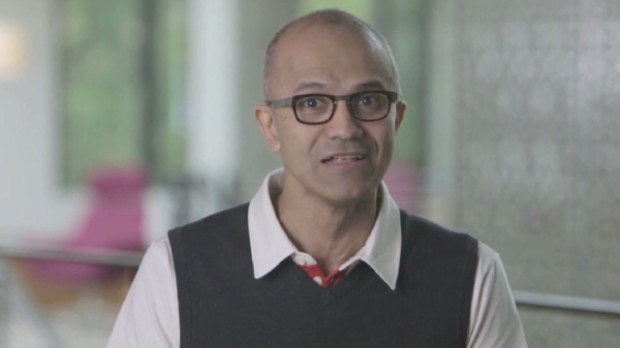
Microsoft names Nadella CEO, Gates out as chair

How Nadella will change Microsoft
Nadella
Microsoft has named Satya Nadella as its new CEO and announced that founder Bill Gates will step down as chairman of the company's board.
Nadella is a 22-year veteran of Microsoft (MSFT, Fortune 500) who has been overseeing various aspects of the company's corporate software business since 1992. Over the past several years, Nadella's cloud and enterprise division has been one of Microsoft's best-performing units.
As Microsoft's cloud and enterprise group chief, Nadella oversees the company's server software and back-end technology for corporate customers. He also is in charge of several consumer cloud products, including Office 365, as well as the Bing search engine, Xbox Live and Skype. Prior to joining Microsoft, Nadella worked at Sun Microsystems, which is now owned by Oracle (ORCL, Fortune 500).
Nadella has been named CEO amid a major transition at Microsoft. He is replacing Steve Ballmer, who announced in August that he was stepping down as CEO. The company's famed consumer business is struggling, including sales of Windows. Meanwhile, corporate revenue now makes up two-thirds of Microsoft's overall sales and is instrumental in driving Microsoft's growth.
"During this time of transformation, there is no better person to lead Microsoft than Satya Nadella," said Gates in a prepared statement. "His vision for how technology will be used and experienced around the world is exactly what Microsoft needs as the company enters its next chapter of expanded product innovation and growth."
Microsoft also said that Gates will be working closely with Nadella in a new technology adviser role. Gates will be replaced by current Microsoft board member and former Symantec (SYMC, Fortune 500) CEO John Thompson as new chairman of Microsoft. Gates and Ballmer will remain on the company's board.
Nadella was Microsoft's second-highest paid executive last year, earning $7.7 million in salary, bonuses and stock grants. Only chief operating officer Kevin Turner made more. Microsoft has not yet announced Nadella's new compensation package.
Many think that Nadella is somewhat of a safe choice for Microsoft. He is personable, and well-liked at Microsoft and within the technology world at large. But he isn't bringing fresh perspective or any outside influence.
In many ways, Microsoft's CEO search was bungled from the start. Ballmer failed to groom an obvious replacement during his 13-year tenure as CEO, and he announced his retirement with no successor in place. The CEO search was filled with leaks to the press, particularly about the desire to hire Ford (F, Fortune 500) CEO Alan Mulally. But the board was seemingly unable to find an outside candidate they could agree upon.
The choice of Nadella seems to be a signal that Microsoft wants to maintain the status quo even though it is a company that many believe needs shaking up.
Nadella acknowledged that a main part of his job as CEO will be to speed up the process of bringing innovative products to customers. Microsoft has struggled to adapt to the mobile revolution, as Apple (AAPL, Fortune 500) and Google (GOOG, Fortune 500) have dominated that market. One of his key tasks will be to find a way to integrate the mobile device business of Nokia (NOK), which Microsoft agreed to buy last year.
"I couldn't be more honored to have been chosen to lead the company," Nadella said in a statement. "The opportunity ahead for Microsoft is vast, but to seize it, we must focus clearly, move faster and continue to transform."
It's unclear how much leeway he will have though. Even though Gates will no longer be the company's chairman, the Microsoft founder is taking a more active role at Microsoft, which could mean his grip on the company is only getting tighter.
"There is no question that this is still Bill's company," said a Microsoft employee who asked not to be named.
But analysts are hoping for more drastic moves. One worried that Nadella will face resistance from Gates and Ballmer.
"We do not want to see a continuation of the existing direction for the business, so it will be important that Mr. Nadella be free to make changes," said Rick Sherlund, analyst at Nomura Securities. "We question whether it will become necessary for Mr. Ballmer to step aside as a director to facilitate this. We do not think having two previous CEOs on the board to report to as he redirects the business is a good idea."  (CNN)

Sunday, 2 February 2014

Syrian hackers compromise PayPal UK, eBay domains


Hacking group Syrian Electronic Army today breached and defaced websites belonging to PayPal UK and eBay, though each website was resolving without issue or defacement after the announcement was made.
SEA PayPal Ebay hack

The SEA provided its evidence on Twitter, with an example of what appeared to be PayPal.co.uk's website with a fresh deface, and a second follow-up tweet labeled "Internal Paypal communications confirming penetration."

The Twitter account used by the Syrian Electronic Army for the announcement has since been suspended.

PayPal confirmed the security breach telling ZDNet via email, "PayPal's Sr. Director of Global Initiatives notes that the problem was limited to marketing pages in the UK, France, and India redirecting, that it has been resolved, and no user data was compromised."

PayPal did not provide an explanation regarding the display of its paypal.co.uk URL in the evidence of the hack as provided by the Syrian Electronic Army.

Nor did PayPal address the eBay UK forum members who tried to visit eBay.co.uk and experienced what they described as an hour-long outage of eBay's primary UK website from a Syrian Electronic Army attack.

Saturday, 1 February 2014

BOI to begin disbursement of AfDB $500m fund soon

The Bank of Industry (BOI) on Friday announced that it would soon commence the disbursement of the African Development Bank’s 500 million dollars fund to industrialists in Nigeria.

The Chairman of the bank’s Shareholders Committee, Mr Muhammed Dikwa, announced the plan at the 53rd Annual General Meeting of the bank in Abuja.

Dikwa said that the Federal Government facilitated the acquisition of the fund in order to deepen the bank’s credit delivery process and funding of the industrial sector at concessionary rates.

“As soon as BOI complies with the disbursement process which has reached an advanced stage, the Nigeria industrialists will start benefiting from the incentive-backed facility,” he said.

Aside from the AfDB’s funds, he said that there were other existing development fund initiatives under the bank’s management, including the five billion naira BOI/Dangote Small-Scale Businesses Development Fund.

Other available funds are N100 billion Cotton, Textile and Garment (CTG) Fund, National Automotive Council (NAC) Fund, NFRA Rice Processing Intervention Fund, Cement Fund, Dikwa said.

He added that Cottage Industries Fund and Small-Scale Processing Fund and National Sugar Development Fund were also available.

Dikwa also stated that the bank recorded increment in fund disbursement by five per cent from N218.8 billion in 2011 to N229.18 billion in 2012 and that the number of beneficiaries also increased from 498 in 2011 to 534 in 2012.

According to him, BOI’s schemes have generated indirect employment with the cumulative turnover of the obligators increasing from N503.17 billion per annum before intervention, to N659.15 billion after.

“Direct employment by beneficiaries increased from an average of 62,097 before intervention to 76, 581 after intervention, representing an increase of 23 per cent,” he said.

The chairman also said that total fund disbursed under the N300-billion Power and Aviation Fund (PAIF) increased by 23 per cent from N147 billion in 2011 to N181 billion in 2012.

He claimed that the beneficiaries under the PAIF scheme had been able to increase their investments in assets and revenue base as a result of lower obligations that they were given on the loan.

“The PAIF scheme has helped in promoting the development of long-term bank credits for
infrastructure financing and institutional capacity building for financing power projects within the banking sector,” he said. (NAN)

Friday, 17 January 2014

Nigerian airports not among Africa’s top 15 – Report

Despite the various reforms being carried out in the country’s aviation sector, no Nigerian airport is listed among the top 15 in Africa.

Statistics obtained from ‘The Traffic Monitor’ by Moodie on Wednesday showed that airports in Egypt, South Africa and Morocco dominated the top 15 list.

Statistics updated by Wikipedia in January 2014 rated the OR Tambo International Airport, Johannesburg as the topmost in the continent, while the Cairo International Airport followed in the second position.

The Cape Town International Airport is on the list, while the Mohammed V International Airport, Morocco occupies the fourth position. The Hughada International Airport and Sharm-el-Sheikh International Airport, both in Egypt, follow in that order.

The King Shaka International Airport in South Africa occupies the seventh position, while the Marrakesh Menera Airport, Morocco is eight.

Others are the Sir Seewoosagur Ramgoolam International Airport, Mauritius; Borg El Arab Airport, Egypt; and the Agadir Al Massira Airport, Morocco.

Two Nigerian airports, the Murtala Mohammed International Airport, Lagos, and the Nnamdi Azikwe International Airport, Abuja, made the top 15 list in the previous review carried out in 2013. They, however, did not make the list this year.

The Chief Executive Officer, Finum Aviation Services, Mr. Sheri Kyary, said the Nigerian aviation industry was not marketing itself.

He said, “There should be more efforts to create awareness of the potential of the industry to the public. As of today, we still have statistics showing that the number of people flying in the country is less than 10 per cent of the population.

“So, they should raise awareness and target 15 per cent flying population in the next two years, thereafter they can add five per cent every year.”

Kyary noted that while the current Aviation minister was just focusing on airport terminal development, other key things that make any airport reliable were navigational facilities.

National carrier plan’ll fail within five years –Experts

Experts in the aviation sector have predicted that the national carrier project being currently promoted by the Federal Government will likely fail in the next five years.

For instance, a former Executive Director of Bellview Airlines, Mr. Gbenga Olowo, hinged his prediction on the fact that the regulators had yet to put things in place to ensure the successful take-off of the carrier.

Olowo said this in an interview with our correspondent on the sidelines of an event organised by the Aviation Safety Round Table Initiative in Lagos on Thursday.

He stated that the project was bound to fail because key issues that caused the failure of some top airlines in the country in the past had not been addressed.

Olowo said, “If the Federal Government decides to go ahead with the single national carrier plan, I am giving that project just five years; it will go the way of others before it. I am saying this because the authorities have not addressed the basic issues.

“Take the issue of fuel, which has been a major problem for our operators over the years; we have not addressed it yet, and also, the environment has been killing these things airlines; you have to put all these things into consideration before such a project can work.”

He said what the country needed at this point in time were three national carriers, and urged the Federal Government to designate three domestic carriers as national carriers.

Olowo, who is also the President, Sabre Travel Network, said the three airlines to be designated as national carriers should have the capacity to grow their fleet to about 50 aircraft, adding that this was the only way Nigerian carriers could compete with the over 27 foreign airlines flying into the country.

He said if the domestic airlines must compete with the foreign carriers, they needed to embrace consolidation by pulling resources together to enhance their capacities.

 Olowo said the current low capacity level of Nigerian carriers explained why none of them could enter into major global airline alliances.

A former Managing Director, Nigerian Airspace Management Agency, Capt. Roland Iyayi, canvassed a three-tier licensing structure for domestic airlines, which should be granted approval for operations according to the scope and capacity of their operations.

Scandals: FG reduces aviation ministry’s budget by N9.3bn

The different scandals and the huge amount of funds in the coffers of the Federal Ministry of Aviation may have necessitated the slashing of its budget for this year by N9.3bn when compared to what it got in 2013.


An analysis of the entire ministry’s 2014 budget proposals currently before the National Assembly reveals that N32.3bn has been allocated to it as against the N42.1bn budgeted for the sector last year.

Findings by our correspondent showed that three out of the six agencies under the ministry did not get any allocation in the 2014 budget proposals.

The parastatals without any allocation are the Nigerian Civil Aviation Authority, Federal Airports Authority of Nigeria and the Nigerian Airspace Management Agency.

The other parastatals in the sector include the Nigerian Meteorological Agency, which has N3.56bn proposed for it this year; Nigerian College of Aviation Technology, N3.21bn; and the Accident Investigation Bureau, N2.53bn.